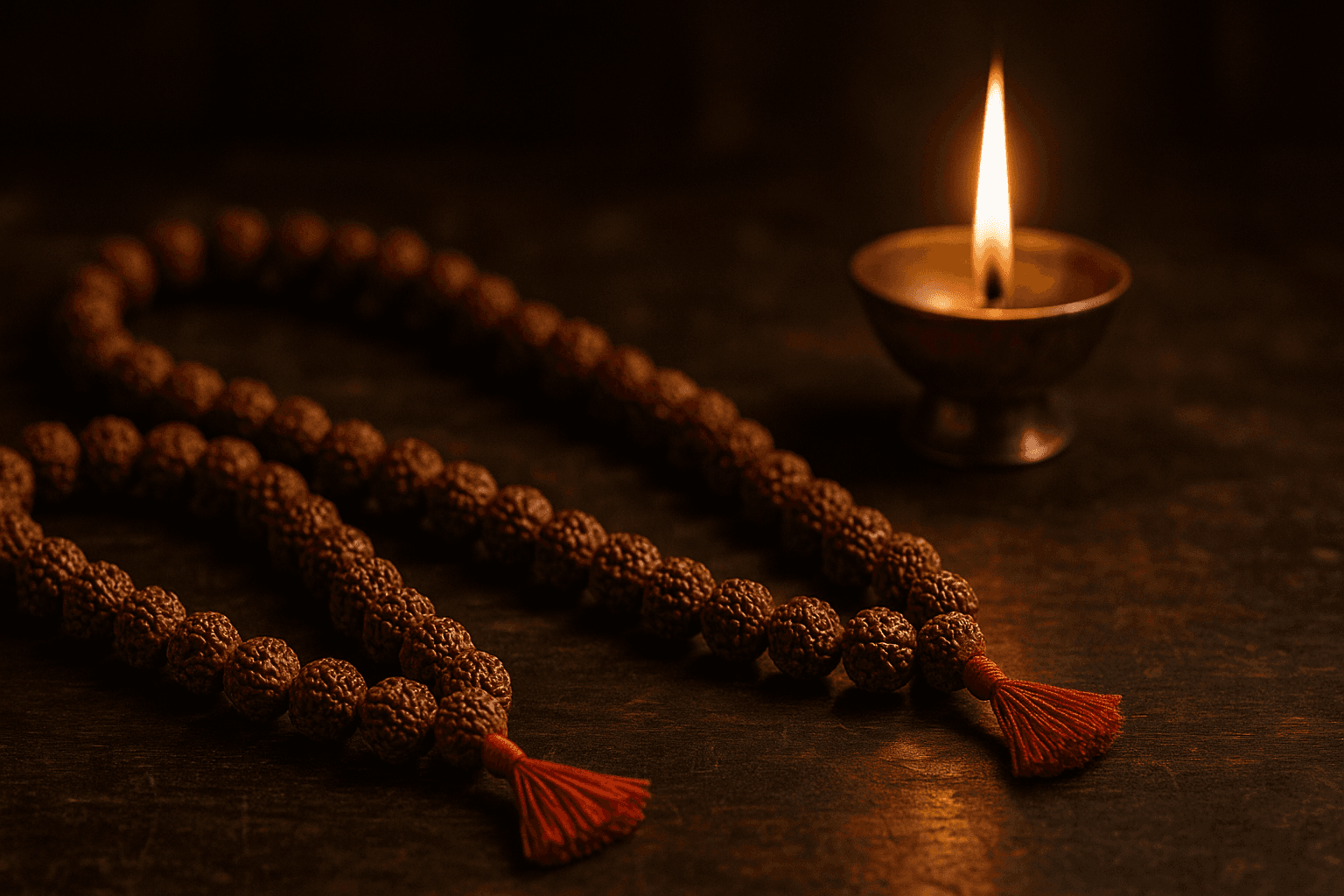
Rudraksha beads are classified by "mukhi" — the number of natural clefts or facets running down the seed's surface — and different mukhi counts are traditionally assigned different planetary and deity associations. The 5 Mukhi is by far the most commonly available and widely worn, making it a natural starting point; the 7 Mukhi is rarer and traditionally reserved for a more specific purpose. Here's how to choose between them.
5 Mukhi vs 7 Mukhi: The Traditional Difference
The 5 Mukhi Rudraksha is associated with Lord Shiva in his Kalagni Rudra form and, by extension, with Jupiter (Guru). It's considered the most balanced, gentle, and universally suitable bead — commonly recommended for general wellbeing, mental clarity, and spiritual grounding, and is the bead most often used to string a full 108+1 japa mala for daily meditation, since it's considered safe for virtually anyone to wear without a specific astrological indication.
The 7 Mukhi Rudraksha is associated with the seven divine mothers (Saptamatrika) — Brahmi, Maheshwari, Kaumari, Vaishnavi, Varahi, Indrani, and Chamunda — and with Goddess Mahalakshmi, and by planetary association with Saturn (Shani) similarly to how 5 Mukhi ties to Jupiter, but through a different traditional lineage. It's more specifically sought for financial stability, career growth, and easing Saturn-related planetary periods, rather than as a general-purpose meditation bead.
Authenticity for both is verified the same way: natural, irregular mukhi lines (versus artificially carved ones), seed origin (Nepal and Indonesia are the primary sources), and increasingly, lab certification — IGL and similar labs now issue reports for Rudraksha the same way GIA/IGI do for gemstones.
How to Choose Well
- 1.Start with 5 Mukhi if you're new to Rudraksha. It's the most widely available, most affordable, and traditionally considered suitable for daily wear without a specific astrological reason — the standard entry point.
- 2.Choose 7 Mukhi for a specific goal. If your reason for wearing Rudraksha is financial stability, career growth, or easing a difficult Saturn period specifically (rather than general wellbeing), 7 Mukhi is the traditional choice — ideally after confirming with an astrologer that it fits your chart.
- 3.Check bead size and count. Malas are typically sold as 108+1 (Meru/guru bead) strings for japa meditation, or as shorter bracelet-length strands for everyday wear — pick based on whether you want a meditation tool or a daily-wear piece.
- 4.Verify natural clefts, not carved lines. Genuine mukhi lines are irregular and slightly uneven; artificially carved fakes tend to look too symmetrical. Ask for lab certification (IGL or similar) if this matters to you, particularly for rarer mukhi counts.
- 5.Energise before wearing. Traditional practice recommends energising a new Rudraksha (via a priest's blessing or a simple Vedic ritual) before first wear, commonly on a red or black thread.
Mukhi Rudraksha Malas: Current Pricing at Gemtre
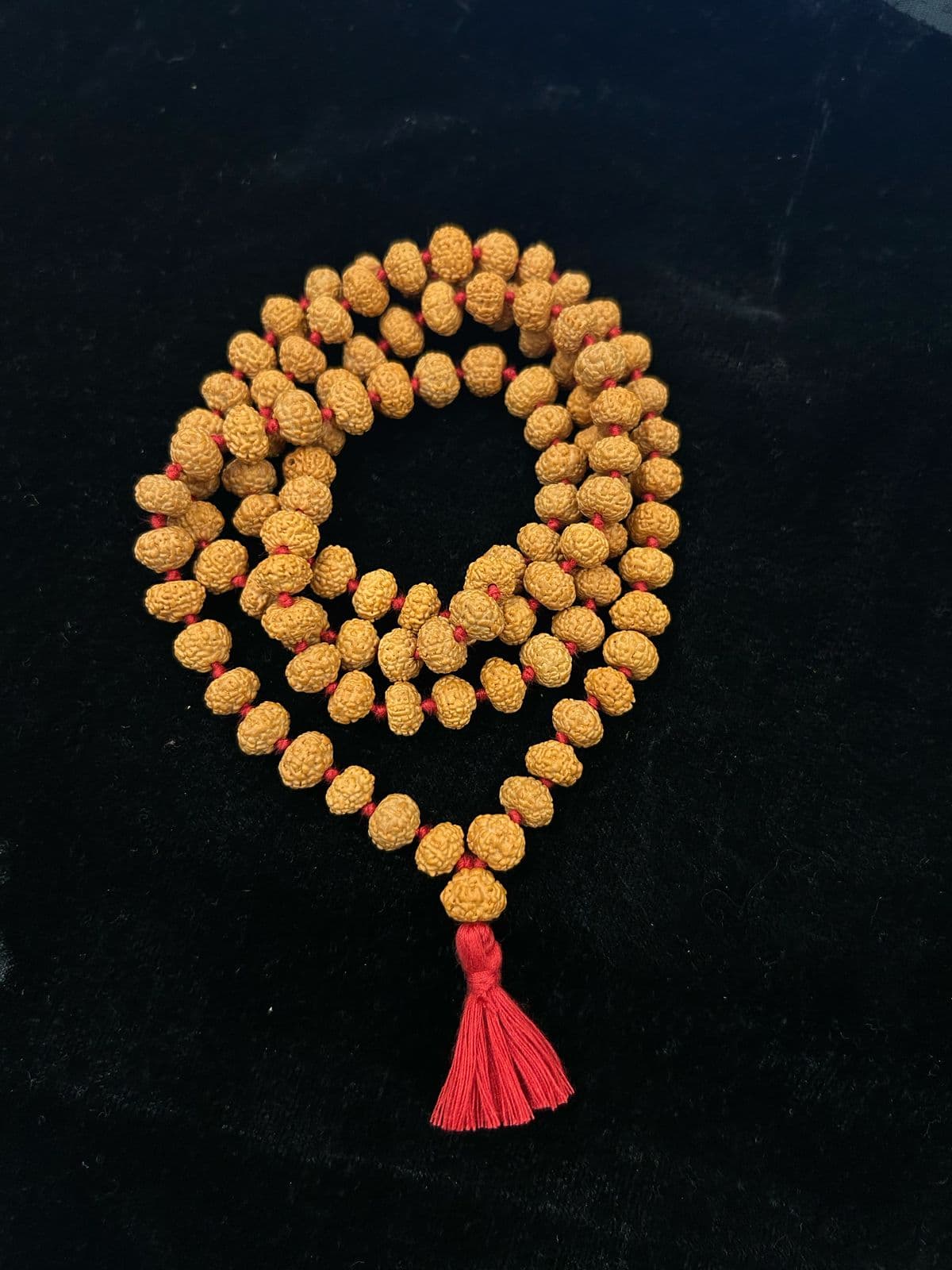
Gemtre currently lists 26 mukhi-Rudraksha mala products (5 Mukhi, 7 Mukhi, and other counts), priced from ₹500 to ₹45,000 depending on mukhi count, bead size, and certification, with 24 of 26 currently in stock. A 5 Mukhi mala typically starts far lower than a 7 Mukhi mala of comparable size, reflecting its greater natural availability.
Real Pieces From This Collection

Frequently Asked Questions
Is 5 Mukhi or 7 Mukhi Rudraksha better?
Neither is objectively "better" — they serve different traditional purposes. 5 Mukhi is the general-purpose, safe-for-daily-wear bead associated with Jupiter and overall wellbeing; 7 Mukhi is more specifically associated with Saturn, Goddess Mahalakshmi, and financial/career concerns. Choose based on your reason for wearing Rudraksha, ideally with an astrologer's input.
Can I wear 5 Mukhi and 7 Mukhi Rudraksha together?
Yes — combining mukhi counts on a single mala or as separate pieces is a common traditional practice, and combination malas (e.g. our 7 Chakra or mixed-mukhi designs) are widely available. There's no traditional restriction against wearing more than one mukhi count at once.
How do I know if my Rudraksha is genuine?
Check for natural, irregular mukhi lines rather than artificially carved ones, confirm seed origin (Nepal or Indonesia), and ask for lab certification (IGL or similar) where available — this is the most reliable verification, since visual inspection alone can be fooled by skilled fakes.
How should I care for a Rudraksha mala?
Keep it away from moisture and harsh chemicals, remove before bathing or swimming, and follow your practitioner's guidance on removing it before non-vegetarian meals or specific rituals, per traditional conduct guidelines.
Do I need to energise a new Rudraksha before wearing it?
Traditional practice recommends it — commonly via a priest's blessing or a simple Vedic ritual — before first wear, usually strung on a red or black thread. This is considered part of activating the bead, not a mandatory requirement for every wearer.