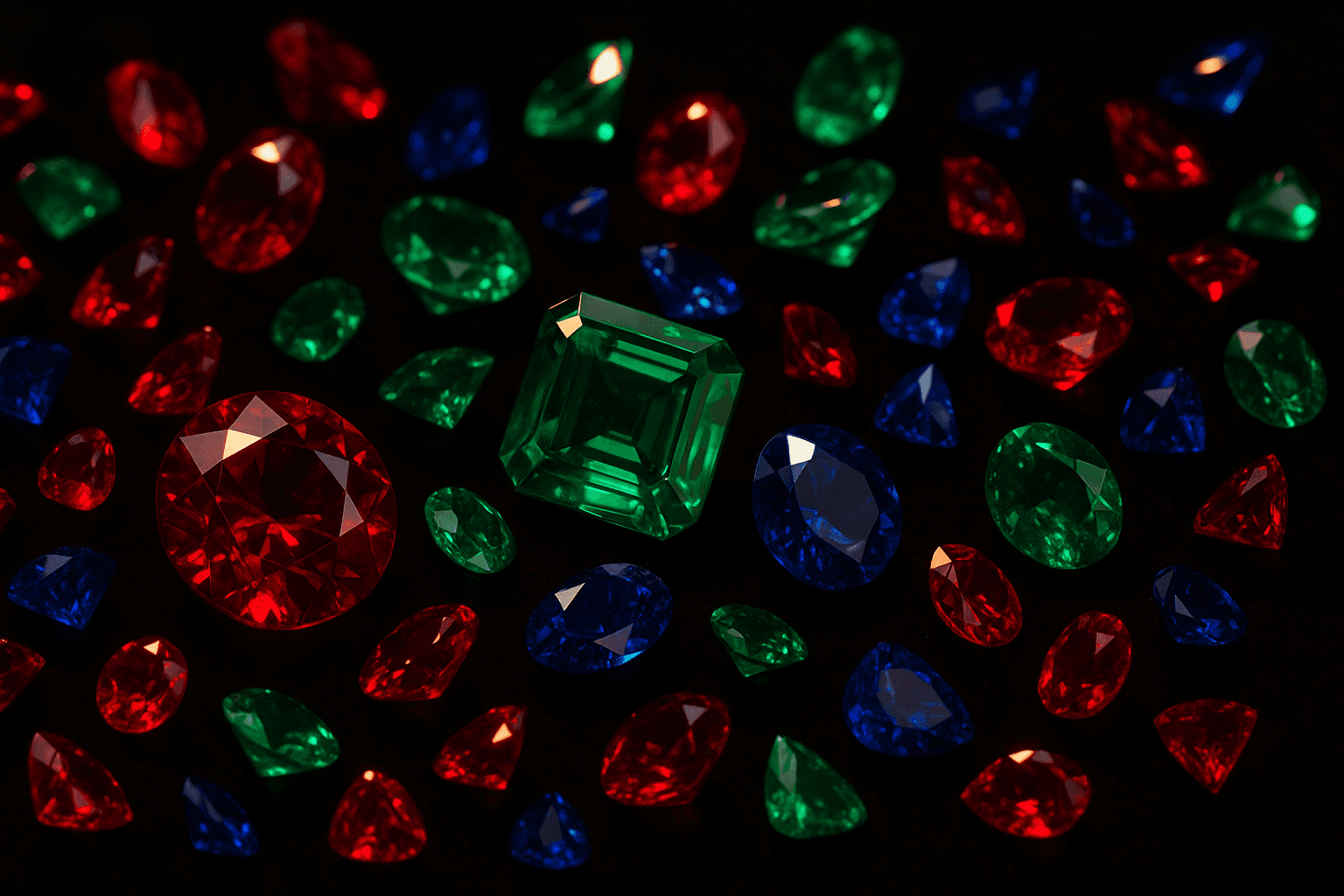
Gemstones hold a distinct place in Gemtre's catalog of gemstones, Rudraksha, crystals, and spiritual items rooted in Vedic and Indian tradition. This guide covers what gemstones are, how to choose one well, and what's genuinely available right now — priced and in stock — in Gemtre's live catalog.
About Gemstones in Vedic Astrology
In Vedic astrology, gemstones are traditionally associated with the nine celestial bodies — the Navagraha — each said to govern a distinct sphere of life. The Navratna, or "nine gems," is the classical set linking Ruby to the Sun, Pearl to the Moon, Red Coral to Mars, Emerald to Mercury, Yellow Sapphire to Jupiter, Diamond to Venus, Blue Sapphire to Saturn, Hessonite to Rahu, and Cat's Eye to Ketu.
The traditional approach to choosing a gemstone considers a person's birth chart (janma kundli), the placement and strength of the relevant planet, and the person's ascendant (lagna) — a practice usually undertaken with an astrologer's guidance rather than by appearance or budget alone. This is why many buyers seek a consultation before selecting a stone, rather than choosing one off a shelf.
Gemstones are also categorised by how they've been treated: natural/unheated stones are valued in their as-mined state, while heating, oiling, dyeing, or irradiation are long-standing trade practices used to enhance clarity or colour. Reputable sellers disclose treatment status, and lab certification (from bodies such as GIA, IGI, or GRS) is the standard way buyers verify a stone's authenticity, origin, and treatment history before purchase.
How to Choose Well
- 1.Start with certification. A recognised lab report (GIA, IGI, or GRS) is the standard way to confirm a stone's identity, natural origin, and any treatment — ask to see it before you buy, not after.
- 2.Understand treatment status. Natural/unheated stones are valued as-mined; heated, oiled, dyed, or irradiated stones are legitimate trade categories too, but the treatment should always be disclosed clearly.
- 3.Match the stone to your purpose. For astrological wear, the planet-to-gemstone mapping and your birth chart matter more than appearance alone — a consultation before buying is worth the time.
- 4.Check weight against your budget. Gemstone pricing scales with carat/ratti weight, so compare price-per-ratti across similar-quality stones rather than sticker price alone.
Gemstones: Current Pricing & Availability
Currently, Gemstones pieces on Gemtre range from ₹240 to ₹2,87,500, based on 301 listed products. 238 of 301 listed pieces are currently in stock. Certificate numbers aren't yet on file for this category in our system — this is a known gap we're actively closing, so ask our team directly if certification is important for your purchase. Weights on offer span roughly 2.5 to 17 ratti. The most common treatment status recorded for this category right now is "natural".
Real Pieces From This Collection


Frequently Asked Questions
How do I know a piece in this category is genuine?
Look for lab certification from a recognised gemological laboratory (GIA, IGI, or GRS), which verifies identity, origin, and treatment status. Certified products display this information where it's on file.
What's the difference between natural and treated stones?
A natural (unheated) stone is sold as mined, with no enhancement. Treated stones have been heated, oiled, dyed, or irradiated to improve clarity or colour — both are legitimate trade categories, but treatment should always be disclosed since it affects astrological suitability and long-term care.
How do I choose the right piece for my birth chart?
Vedic astrology traditionally recommends choosing a gemstone based on your birth chart and the planet it represents. We recommend a consultation with an astrologer before an astrological purchase — see our Consultation page.
How should I care for this kind of piece?
Care varies by material. Gemstones should generally be kept away from harsh chemicals and extreme heat, and cleaned gently with a soft cloth. Rudraksha should be kept dry and away from moisture. Product-specific notes are provided where available.
Can I return something I've bought?
Products are energised before dispatch and meant to be used fresh, so general returns aren't offered after trial. Loose Navratna gemstones are the exception — exchangeable (not refundable) at our Karol Bagh showroom within one month, subject to a 15% deduction and verification. See our Returns Policy for details.
How many pieces in Gemstones are currently in stock and certified?
As of the most recent catalog sync, 238 of 301 Gemstones products are currently in stock. No certificate numbers are on file for this category yet in our system — please ask our team to confirm certification status before purchase.