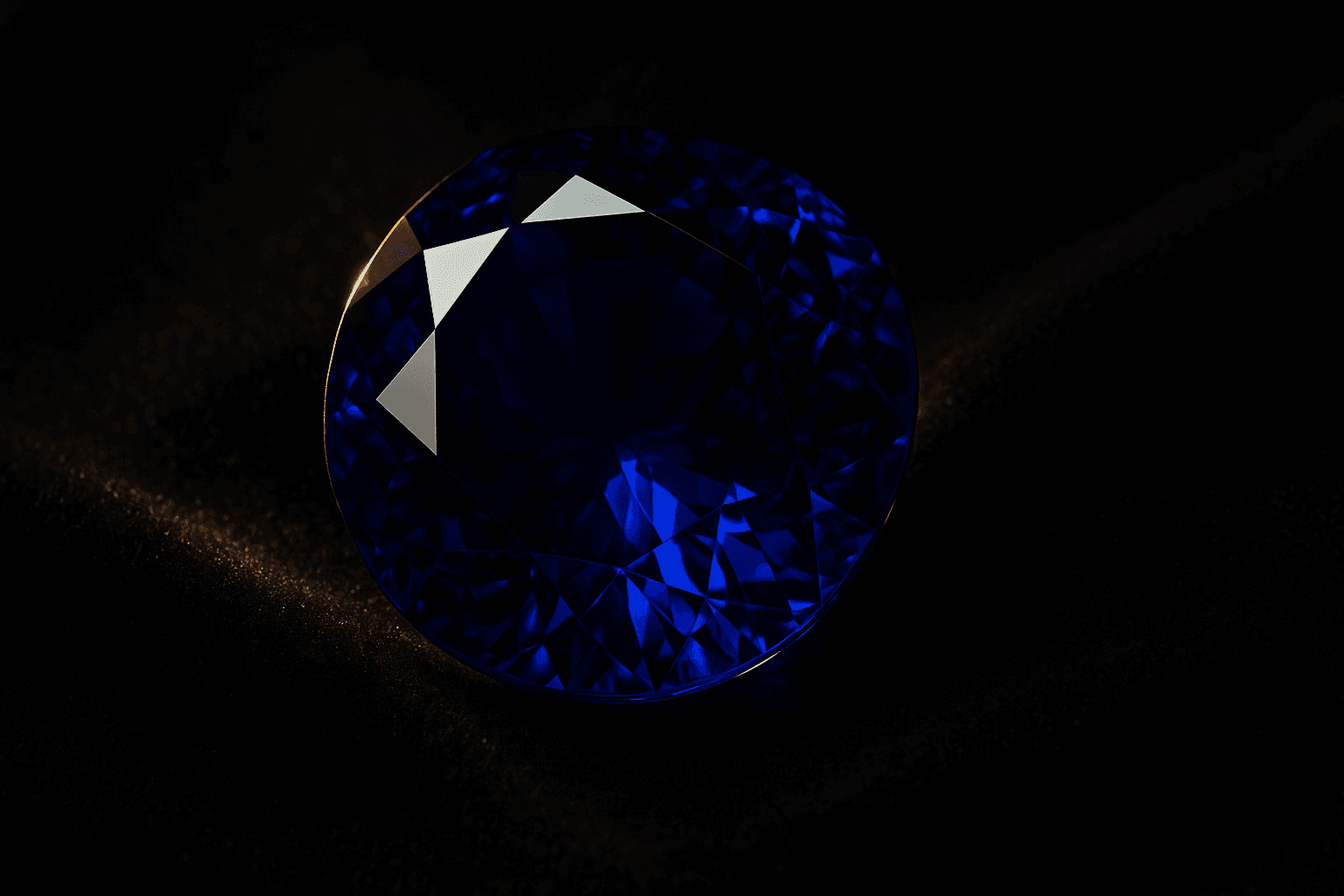
Blue Sapphire — Neelam in Sanskrit — has a reputation unlike any other gemstone in Vedic astrology: it's said to work faster than any other stone, for better or worse. Ruled by Saturn (Shani), one of the most demanding planets in the birth chart, Neelam is credited with rapid gains in career and finance for a good match, and equally rapid discomfort for a poor one. This guide covers both sides honestly, along with how the trade actually tests for a match before full-time wear.
What Blue Sapphire Is Believed to Do
In Vedic astrology, Blue Sapphire strengthens Saturn's positive influence for a wearer whose chart benefits from it — traditionally associated with career growth, financial stability, discipline, and mental clarity. It's often recommended for those going through a Saturn-related planetary period (Shani Sadhe Sati or Dhaiya) where Saturn's effects need balancing rather than resisting.
Physically and gemologically, Blue Sapphire is a variety of corundum (the same mineral family as Ruby), valued for its deep blue-to-violet-blue colour caused by trace iron and titanium. The finest stones — Kashmir-origin sapphires with a velvety cornflower blue — are historically the most prized and expensive; Sri Lankan (Ceylon) and Burmese stones are the more commonly available grades in the trade today.
Because Saturn's astrological effects are considered intense in both directions, Neelam is the one gemstone almost every astrologer insists on testing before committing to permanent wear — a caution that doesn't apply nearly as strongly to gentler stones like Pearl or Yellow Sapphire.
How to Choose Well
- 1.Test before you commit. Wear the stone (ring or pendant, touching skin) for 3 to 7 days as a trial. A positive match typically shows as improved sleep, sharper focus, or a sense of calm; a poor match can show as anxiety, irritability, financial setbacks, or health complaints within the same window.
- 2.Know the real side effects of a mismatch. Astrologically, a poorly matched Neelam is associated with sudden financial loss, accidents, family disputes, or persistent bad luck — this is exactly why the trial period exists, and why buying one "because it looks nice" without a consultation is discouraged.
- 3.Verify natural vs. synthetic. Natural, unheated Blue Sapphire is valued highest; heat treatment to improve colour/clarity is a long-standing, disclosed trade practice; synthetic (lab-created) sapphire has no astrological value in traditional practice despite looking visually similar — always ask for the treatment status in writing.
- 4.Get lab certification. A GIA, IGI, or GRS report confirms natural origin and treatment status — essential given how visually similar natural, treated, and synthetic blue sapphire can be to the naked eye.
- 5.Match the metal and finger. Neelam is traditionally set in silver or panchdhatu (five-metal alloy), not gold, and worn on the middle finger of the working hand, first put on during Saturn's hour on a Saturday.
Blue Sapphire: Current Pricing & Availability at Gemtre
Gemtre currently lists 19 Blue Sapphire pieces, ranging from ₹3,050 to ₹69,000 depending on weight and origin, with 11 of 19 currently in stock. Most listed stones are recorded as natural/unheated. As with every gemstone category, ask our team to confirm current certification status on a specific piece before purchase.
Real Pieces From This Collection


Frequently Asked Questions
What are the real benefits of wearing Blue Sapphire?
Traditionally credited with strengthening Saturn's positive influence — career growth, financial stability, discipline, and mental clarity — particularly for those going through a Saturn-related planetary period. Results are considered astrological/traditional, not medically or scientifically proven.
What are the side effects of Blue Sapphire if it doesn't suit me?
A poor astrological match is associated with sudden financial loss, anxiety, family disputes, health complaints, or a general run of bad luck. This is exactly why a 3-7 day trial period before permanent wear is standard practice, not an optional extra.
How do I test if Blue Sapphire suits me?
Wear it (touching skin, as a ring or pendant) for 3-7 days and observe how you feel — improved focus and calm suggest a good match, while anxiety or setbacks suggest it isn't. Consult an astrologer both before selecting the stone and while interpreting the trial.
Which finger and metal is Blue Sapphire worn on?
The middle finger of the working hand, traditionally set in silver or panchdhatu (a five-metal alloy) rather than gold, first worn during Saturn's hour on a Saturday.
How can I tell if a Blue Sapphire is natural or synthetic?
Not reliably by eye — natural, heat-treated, and lab-created (synthetic) blue sapphire can look near-identical. A recognised lab report (GIA, IGI, or GRS) is the standard way to confirm natural origin and treatment status before buying.
Who should avoid wearing Blue Sapphire?
Vedic astrology generally advises against wearing Neelam without a consultation, since Saturn's placement varies significantly by chart — a stone that helps one person can be unsuitable for another with a differently placed Saturn. This is not a stone to buy off a shelf without guidance.